
Eviction Expungement Available Beginning July 1
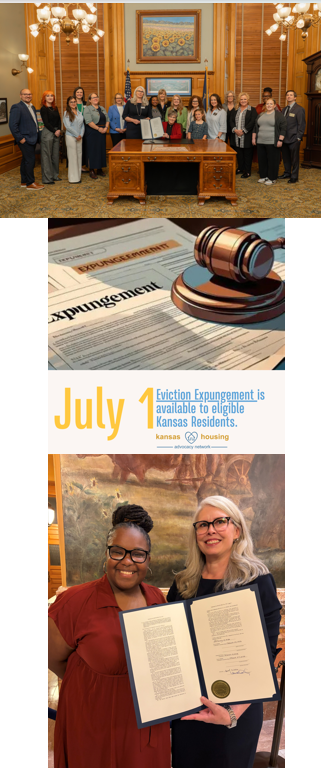 As we shared in our March newsletter, housing
stability is closely tied to employment, education, and health. Preventing avoidable evictions and removing long-term barriers strengthens not just individual households, but entire communities.
In late May, members of the Kansas Housing
Advocacy Network (KHAN) team were honored to join Governor Laura Kelly for the ceremonial signing of HB 2357, celebrating this significant step forward for Kansas renters and communities.
Over the past month, KHAN and our partners have
been preparing for the law’s implementation by
developing informational resources, including
eligibility guidance, FAQs, provider information
sheets, and a communications toolkit to help ensure
Kansans and the organizations that serve them are
ready for the July 1 launch.
Starting tomorrow, July 1, thousands of Kansans will
be eligible to petition the court to have certain
satisfied or dismissed eviction records expunged,
creating new opportunities for housing and economic stability.
These resources are now available on our website.
We encourage you to explore the materials, share
them with your networks, and help spread the word so
eligible Kansans can take advantage of this important
opportunity.
Together, we can help remove barriers to housing
stability and create stronger communities across
Kansas.
Elevating Housing Issues in the 2026 Election Cycle
As a nonpartisan organization, United Community Services (UCS) is committed to supporting informed civic engagement around issues that impact our communities. Housing stability and homelessness affect health, education, workforce participation, and overall community well-being, making them important topics for discussion during election season.
If you’re interested in learning where candidates stand on housing issues, consider these opportunities:
- Encourage candidates to participate. The Kansas State Housing Coalition (KSHC) has developed a Candidate Survey on Housing and Homelessness for individuals seeking state and federal office. Community members are encouraged to share the survey with candidates in their districts. Input your address or district in PluralPolicy to identify who currently represents you and Voter Network is currently updating candidates for all elections statewide.
- Attend a candidate forum. Local candidate forums provide an opportunity to hear directly from those seeking office and to ask thoughtful questions about housing, homelessness, and other community priorities.
- League of Women Voters Johnson County
- The Kansas GOP events are listed here.
- The Kansas Democratic party events are listed here.
Stay informed and share information. Whether through community conversations, local events, or trusted resources, informed participation helps strengthen our democracy and ensures important issues remain part of the public dialogue
UCS does not endorse or oppose candidates or political parties. We encourage community members to engage respectfully, stay informed, and participate in the democratic process.
Mark your calendars for the 25th Annual Human Service Summit on Wednesday, September 16, 2026.
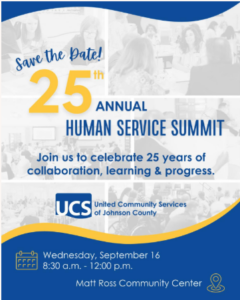 This milestone event will celebrate 25 years of collaboration, learning, and community leaders, partners, and advocates committed to strengthening our region.
Join us as we reflect on the Summit’s legacy while looking ahead to the future of health, belonging, and community. Stay tuned for registration details, keynote announcements, and a special look back at memorable Summit moments from the past 25 years.
Please note: While the Human Service Summit is traditionally held in June, this year’s event has been moved to September in anticipation of the increased activity and travel associated with the FIFA World Cup.
Mental Health Equity Editorial: Creating Communities Where Everyone Belongs
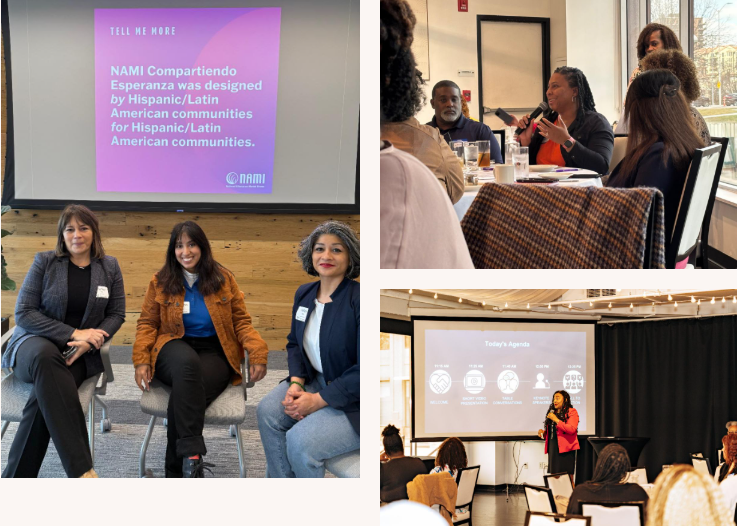
July is Minority Mental Health Month, a time to recognize the unique mental health challenges experienced by historically underserved communities and to reaffirm our commitment to ensuring everyone has equitable access to the care and support they need to thrive.
At United Community Services, we know that advancing health equity means addressing the conditions that shape well-being—including access to culturally responsive mental health services. Through initiatives like our Racial Equity Roundtables, Sister’s Circle, and community partnerships, we continue working toward communities where every person feels seen, heard, and valued.
This month, we’re honored to feature insights from one of our newest partners, NAMI Johnson County, whose work is helping reduce stigma, expand mental health education, and create more welcoming pathways to care through initiatives like Sharing Hope. As Kelly Jackson, Executive Director of NAMI Johnson County, reminds us:
“Mental health challenges don’t exist in a vacuum. Many historically underrepresented communities face additional barriers that can make it harder to access support, including stigma, language differences, financial limitations, transportation challenges, lack of insurance, and difficulty finding providers who understand their cultural experiences.”
Those barriers don’t reflect differences in need—they reflect differences in opportunity. Kelly emphasizes that viewing mental health through a health equity lens means asking not why people aren’t seeking help, but what barriers are preventing them from getting help in the first place.
The impact extends far beyond individuals. Mental health disparities affect families, schools, workplaces, neighborhoods, and entire communities. Investing in equitable supports—including peer-led programs, culturally responsive services, early intervention, and community partnerships—creates stronger, healthier, and more resilient communities for everyone.
At NAMI Johnson County, that commitment includes expanding programs that reflect the communities they serve. Through the Sharing Hope initiative, NAMI is engaging Black and African American communities in conversations about mental health, reducing stigma, and increasing awareness of available resources. The organization is also exploring opportunities to bring Compartiendo Esperanza (Sharing Hope) to Hispanic and Latino communities while continuing to develop diverse volunteer leaders and trusted community partnerships.
Kelly believes lasting change requires all of us.
“Mental health literacy is especially important because it equips people with the knowledge to recognize signs of distress, understand when and how to seek help, and respond to others in supportive and informed ways.”
She concludes with a reminder that closely aligns with UCS’s vision for belonging:
“I believe our community is strongest when everyone has the opportunity to thrive. By working together and ensuring that every person feels valued, respected, and included, we can build a future where mental health support is not a privilege for some, but a reality for all.”
We are grateful to partner with NAMI Johnson County as we continue building communities where everyone belongs and where every person has access to the support, resources, and opportunities they need to live healthy, connected lives.