
Just before midnight on March 27, the Kansas Legislature passed House Bill 2357 with overwhelming bipartisan support: 36–4 in the Senate and 118–3 in the House. The bill, which creates a pathway for eviction expungement, will take effect on July 1, 2026, marking a significant step forward in strengthening housing stability for Kansans.
Addressing a System That Follows People for Life
Each year, Kansas sees more than 16,000 eviction filings, and cases move through the system faster than almost anywhere in the country. Under current law, eviction records remain permanently public—even when a case is dismissed, resolved, or fully paid. This creates lasting barriers for renters trying to secure housing, often long after the underlying issue has been resolved. These records can limit access to housing, employment, and financial stability, with ripple effects across families, schools, and local economies.
A Balanced, Practical Solution
HB 2357 introduces two key reforms designed to improve fairness while maintaining accountability:
- Encourages eviction mediation to help landlords and tenants reach agreements before a judgment is entered
- Creates a path to expungement for renters who demonstrate long-term accountability
To qualify for expungement, renters must:
- Fully satisfy the eviction judgment
- Wait three years
- Have no new eviction judgments
- Provide notice to the prior landlord
This approach ensures that landlords receive payment for eviction judgments and renters are able to resolve eviction and move forward into housing stability.
Benefits for Renters, Landlords, and Communities
HB 2357 is intentionally designed to work across the housing ecosystem:
- For renters: It creates a fair opportunity to rebuild after resolving a past issue and access stable housing
- For landlords: It supports repayment, reduces turnover costs, and encourages resolution without prolonged court involvement
- For communities: It reduces unnecessary displacement, stabilizes neighborhoods, and lowers demand on public systems
Housing stability is closely tied to employment, education, and health. Preventing avoidable evictions and removing long-term barriers strengthens not just individual households, but entire communities. When HB 2357 goes into effect on July 1st, thousands of Kansans will be eligible to seek to have past evictions that have been satisfied or dismissed removed from their records. The passage of HB 2357 reflects the growing strength of coordinated, community-informed housing advocacy in Kansas. Through the Kansas Housing Advocacy Network (KHAN), UCS and partners have helped bring together providers, advocates, and local leaders from across the state to advance practical, bipartisan solutions. Tireless partners supporting this bill’s passage include Rep. Cyndi Howerton, Rep. Leah Howell, Kansas Legal Services, United Community Services, Kansas Statewide Homeless Coalition, and Johnson and Douglas Counties.
Building on What Works
The legislation builds on successful local efforts already underway in Kansas. In Johnson County’s 10th Judicial District, eviction mediation has demonstrated strong outcomes, with the majority of cases reaching agreement and many tenants avoiding an eviction judgment altogether.
These results show that when landlords and tenants have the opportunity to communicate and resolve issues early, outcomes improve for everyone—reducing costs, preserving housing stability, and easing pressure on courts and community systems.
Looking Ahead
HB 2357 represents meaningful progress, but it is part of a broader effort to create a more stable and equitable housing system in Kansas. As the law takes effect in July, ongoing work will focus on implementation, education, and continued policy development.
Housing Advocates Drive Housing Momentum at February Capitol Hill Days
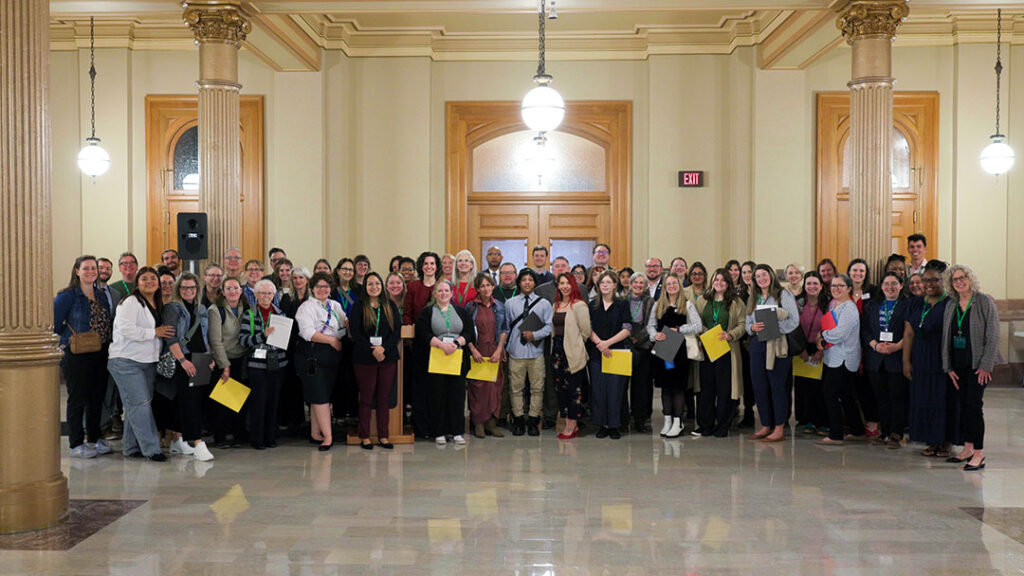
Housing advocates from across Kansas gathered in Topeka on February 3 and 17 for Capitol Hill Days, demonstrating a powerful, unified commitment to advancing housing stability. Across both days, more than 100 advocates showed up—reflecting a truly statewide effort and a shared urgency to address housing challenges.
Advocates met with legislators in both formal and informal settings, sharing lived experiences and community-informed policy solutions. These conversations crossed party lines, reinforcing a clear message: housing is not a partisan issue—it’s a community issue impacting Kansans statewide.
This year also marked a significant milestone, as the Kansas Housing Advocacy Network helped introduce housing legislation for the first time, signaling growing momentum and deeper engagement at the Statehouse.
Collective impact:
- 7 legislators cultivated to sponsor housing bills
- 18 housing bills introduced
- 100+ legislator meetings held
- 100+ pieces of testimony submitted
Together, these efforts strengthened relationships, elevated community voices, and advanced real, workable solutions—building momentum toward a more stable and equitable housing landscape across Kansas.
Centering Equity and Joy: Leading with Care and Intention
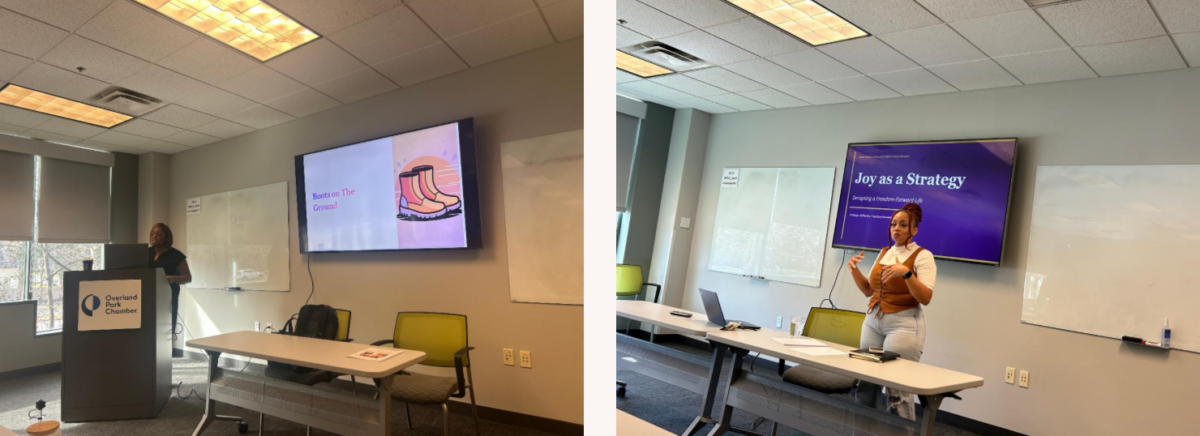
Over the past two months, we’ve gathered in meaningful ways to deepen our commitment to racial equity and explore how joy can sustain this work. In February, our Racial Equity Roundtable with Brandee Collins, centered on healing-centered leadership, grounding us in a simple truth: we are the boots on the ground in our communities. Attendees were reminded that movement is healing and that leadership calls us to stay engaged physically, emotionally, and collectively. Through reflection, participants explored their leadership styles and the CARE Framework, emphasizing connection, action, reflection, and shared leadership. Rooted in care, the conversation challenged how we show up and closed with personal action planning to carry this work forward.
In March, The Sister’s Circle gathered for a workshop led by Xavier Hankins focused on designing a freedom-forward life. Through self-reflection, a “worthy audit,” and identifying areas of intention aligned with their energy and joy, participants were invited to move beyond survival mode toward intentional living. This work reframed joy as a strategic tool for leadership and decision-making. Together, these gatherings remind us that advancing racial equity is not only about dismantling systems, but also about cultivating spaces where people feel seen, supported, and whole. Joy remains essential to sustaining this work, grounding us as we move forward with both courage and care.
UCS hosts the Substance Use Continuum of Care Fund (SUF) Providers Networking Meeting

On March 5, UCS hosted the Substance Use Continuum of Care Fund (SUF) providers networking meeting, convening 22 grantees for the 2026 grant cycle. This quarterly meeting brought together providers who are dedicated to preventing substance abuse, educating our communities, and supporting individuals on their path to recovery. The gathering created space for meaningful connection, shared learning, and renewed inspiration among professionals who work every day to serve others. During the session, attendees had the opportunity to learn practical journaling techniques through several different methods that can be used both personally and professionally to support healing, reflection, and emotional processing.
Participants also heard from published author Jennifer Callahan, who shared insights about the power of writing as a tool for self-awareness, growth, and recovery for clients. Providers left the meeting with a copy of her book, equipping them with resources they can use in their own lives and with the individuals they serve. It was a powerful reminder that when providers care for their own well-being and expand their toolkits, they strengthen their ability to support healthier, more resilient communities.
UCS Connects with Rep. Davids on Federal Housing and Local Impact
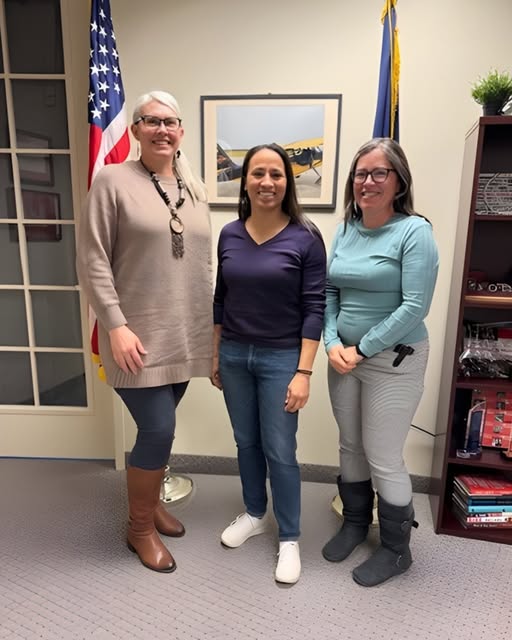
UCS Executive Director, Kristy Baughman, and Director of Community Planning, Rita Carr, had the opportunity to meet with Representative Sharice Davids earlier this month. They shared the important impact of U.S Department of Housing and Urban Development (HUD) funding on our local housing and homelessness response, and the real challenges created by continued uncertainty around federal dollars.
These conversations are essential to protecting services our community relies on. Thank you to Rep Davids for taking the time to connect.
Upcoming Funding Opportunity: Human Service Fund (HSF) Grant Program Addresses Community Needs
The 2027 Human Service Fund application season opens soon. A virtual pre-proposal meeting for 2027 Human Service Fund grants will be held in May and applications will be due in June.
Priorities for 2027 Human Service Fund funding cycle:
Health and human service programs funded by the Human Service Fund must:
- promote self-sufficiency, well-being, and/or personal safety of Johnson County residents and fit within safety net investment components of basic needs, education/training, work and income supports, or health.
- offer county-wide services or fill a gap which results in county-wide benefit.
- offer equal access to all clients and prospective clients who could benefit from the program.
- deliver measurable outcomes which benefit county residents and, in the long-term, benefit local governments by avoiding, deferring, or preventing costs that otherwise might be incurred by local government.
Priority is given to programs that:
- address emergency aid and shelter, adequate housing, child/adult abuse, child welfare, health and mental health, work support services such as transportation, childcare and early childhood development, and job training.
- serve individuals and/or families with income below or near the federal poverty level.
- demonstrate innovation and/or collaboration in program delivery.
- are consistent with an evidence-based program, best practices or promising practices, or replicate a successful model.
- build the capacity of neighborhoods and local jurisdictions to support equity in the social determinants of health.
In 2025, HSF grantees provided services to nearly 65,000 Johnson County residents. For 2026, HSF awarded $473,880 to 19 programs, including 2 programs through a “small grants” pool of funding for new, growing, and grassroots organizations to inclusively support smaller nonprofits. Watch the video below for more information about the Human Service Fund.
Contact Erika Garcia Reyes, erikag@ucsjoco.org for more information.